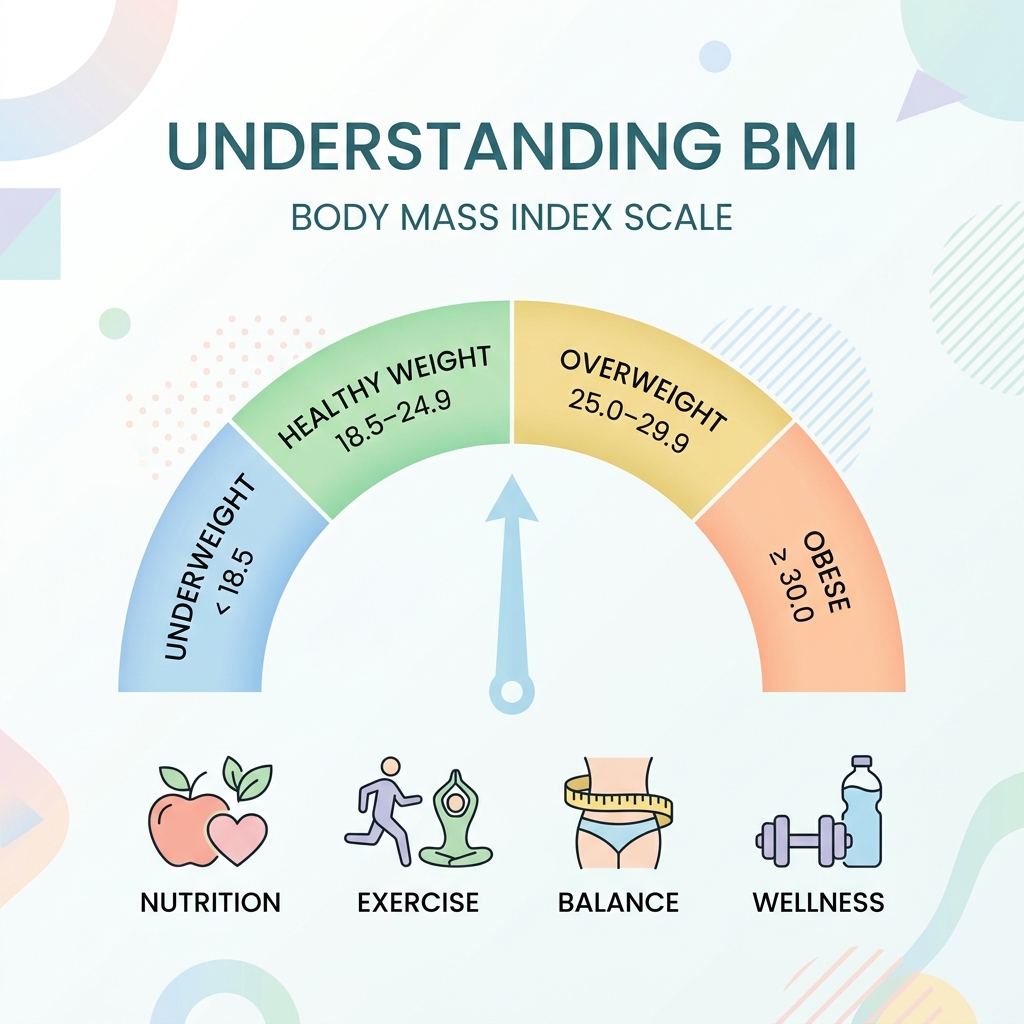
If you have ever visited a doctor or checked a fitness app, you have probably heard of BMI. BMI stands for Body Mass Index, and it is the most common metric used globally to determine if someone is at a healthy weight. But what exactly is the math behind it, and why is it so widely used?
Let's look at how BMI is calculated, how to read your results, and what the numbers actually mean for your health.
The BMI Formulas: Metric vs. Imperial
Calculating BMI is quite simple. It is a ratio of your weight relative to your height. Because it only requires these two numbers, you can calculate it easily at home. Depending on whether you use the metric system (meters and kilograms) or imperial system (inches and pounds), the formulas differ slightly:
1. The Metric Formula (Standard)
In the metric system, you divide your weight in kilograms by the square of your height in meters. Here is the equation:
BMI = Weight (kg) / [Height (m)]²
Example: If a person weighs 70 kilograms and is 1.75 meters tall, the calculation is: 70 / (1.75 * 1.75) = 22.86. Their BMI is 22.9.
2. The Imperial Formula
If you measure in pounds and inches, the math has a small conversion factor. You multiply your weight in pounds by 703, then divide that by your height in inches squared:
BMI = [Weight (lbs) * 703] / [Height (in)]²
Example: If someone weighs 154 pounds and is 5 feet 9 inches tall (69 inches total), the calculation is: (154 * 703) / (69 * 69) = 108,262 / 4,761 = 22.74. Their BMI is 22.7.
Understanding Your BMI Category
Once you calculate your score, it falls into one of four primary ranges established by the World Health Organization (WHO):
| BMI Score | Weight Classification | Potential Health Considerations |
|---|---|---|
| Below 18.5 | Underweight | May benefit from nutritional planning and building lean muscle mass. |
| 18.5 – 24.9 | Normal Weight | Excellent balance. Recommended to maintain with healthy diet and exercise. |
| 25.0 – 29.9 | Overweight | Increased risk of metabolic stress. Simple lifestyle adjustments are helpful. |
| 30.0 or Above | Obese | Higher risk of cardiovascular fatigue and type 2 diabetes. Seek physician guidance. |
What BMI Does NOT Tell You
While BMI is a useful screening tool, it has limitations. Because it only checks total weight and height, it does not distinguish between muscle mass and body fat. For example:
- Athletes and bodybuilders often have high BMIs because muscle weighs more than fat. They might be classified as "overweight" when they are actually in peak health.
- Older adults sometimes lose muscle mass as they age. They might have a "normal" BMI even if they have high levels of internal body fat.
Therefore, BMI should be treated as a starting point rather than a complete assessment of your fitness.
Summary: Tracking Your Health Easily
Monitoring your BMI over time is a great way to ensure you are staying on track with your long-term health goals. By combining your BMI calculations with simple activity tracking and wholesome meals, you can make informed decisions to feel your best every day.